Listeners:
Top listeners:
-
 play_arrow
Revolution Radio Your home for the best variety of Christian music
-
 play_arrow
Heartland Newsfeed Radio Network Heartland Newsfeed Radio Network
-
play_arrow
Heartland Newsfeed Radio Network (Abovecast Backup) Heartland Newsfeed Radio Network
-
 play_arrow
Home For The Holidays Radio
-
 play_arrow
I Ask an Amish Guy about Everything Andrew Heaton, Marcus Yoder
Parasite is spreading through America’s produce aisles
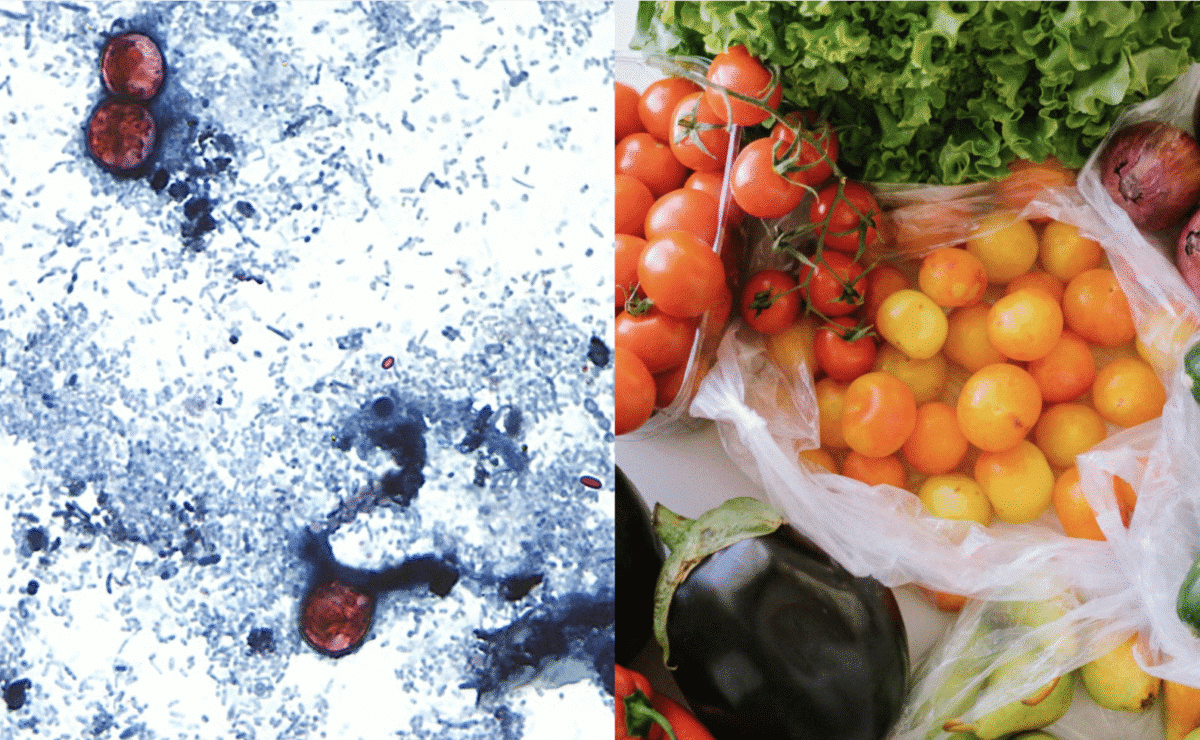
Summer cookouts often come with a side of salad. This year, that salad could come with an unwanted ingredient: a nasty stomach parasite that has sickened thousands of Americans and shows no signs of slowing down.
Cyclosporiasis, a gastrointestinal illness caused by the microscopic parasite Cyclospora cayetanensis, is spreading across more than half the country. As of mid-July, federal health officials had confirmed hundreds of cases stretching across 30 states, with the true number of infections certainly higher since many people recover at home without ever being tested.
Michigan is the epicenter of the parasite outbreak
Michigan has emerged as the epicenter of the outbreak, with more than 1,500 reported cases — by far the highest total in the nation.
Ohio isn’t far behind with more than 100 cases. States from New York to Illinois to Texas have also reported sizable clusters.
Sun Belt states such as Florida and Georgia have logged infections. Scores of hospitalizations have been reported, though no deaths have occurred.
What is the Cyclospora parasite?
Cyclospora is a single-celled parasite invisible to the naked eye. It typically enters the food supply when raw produce comes into contact with water or soil contaminated by human feces — often early in the agricultural supply chain, long before food ever reaches a grocery store shelf. Because the parasite needs time outside the human body to become infectious, cyclosporiasis doesn’t spread directly from person to person the way a cold or flu might.
Once ingested, the parasite can cause days — sometimes weeks — of watery, explosive diarrhea, along with cramping, nausea, fatigue, bloating and loss of appetite. Some patients feel better for a few days, only to relapse. The illness isn’t fatal. However, it can be miserable. Dehydration is a real risk, particularly for young children, older adults, and people with weakened immune systems.
Comparisons between the 2013 and 2026 outbreaks
Unlike the well-known 2013 Cyclospora outbreak, which was eventually traced to imported cilantro and salad mix and sickened more than 600 people. This year’s outbreak has proven harder to pin down. Rather than one contaminated product causing every illness, health officials suspect they may be looking at several separate clusters that don’t necessarily share a common source.
That’s not for lack of trying. Investigators typically interview sick patients about everything they’ve eaten in the days before symptoms appeared, but the parasite’s incubation period — anywhere from two days to two weeks — makes it easy for exposures to slip people’s memory.
Complicating matters further, testing for cyclospora isn’t always straightforward. The parasite can’t be grown in a lab. Many standard food-poisoning and stool tests fail to catch it. Federal budget changes in 2025 that made state reporting of Cyclospora cases optional have also made the outbreak harder to track in real time.
Historically, outbreaks have been linked to raspberries, basil, cilantro, snow peas, leafy greens and salad mixes — foods that are typically eaten raw or rarely cooked long enough to kill the parasite. No specific product has been to blame for this year’s surge, but those are the most likely culprits.
The weakness of the Cyclospora parasite
The good news: Cyclospora has one clear weakness. Heat above 158 degrees Fahrenheit destroys it. Cooking produce when possible is one of the most effective ways to avoid infection. For foods typically eaten raw, a few precautions:
- Buy whole heads of lettuce instead of pre-washed bagged salad mixes.
- Separate and rinse cilantro and basil leaves by leaf under running water.
- Trim and peel the outer layer of green onions before washing.
- Gently scrub snow peas and other produce by hand or with a brush while rinsing.
Standard food-safety habits still matter, too — washing hands before and after handling produce, scrubbing firm fruits and vegetables, and cutting away any bruised or damaged spots before eating.
What to do if you are affected by Cyclospora
Anyone experiencing prolonged watery diarrhea, especially alongside signs of dehydration, should contact a healthcare provider. Cyclosporiasis is typically treated with antibiotics. Because standard stool panels often miss the parasite, doctors may need to specifically request testing for it.
Public health experts note that today’s investigators have far better tools — improved lab methods and faster food traceback systems — than they did in 2013.
Even so, pinpointing the precise source of a produce-borne outbreak remains one of the toughest puzzles in food safety. Officials say it could still be weeks before answers emerge. In the meantime, a little extra caution at the sink may be the best defense this summer.

Henry I. Miller, a physician and molecular biologist, is the Glenn Swogger Distinguished Scholar at the Science Literacy Project. He originally wrote this piece for InsideSources.com.
Similar posts








Post comments (0)