




Listeners:
Top listeners:
00:00
00:00
volume_up
chevron_left
-
 play_arrow
Revolution Radio Your home for the best variety of Christian music
-
 play_arrow
Heartland Newsfeed Radio Network Heartland Newsfeed Radio Network
-
play_arrow
Heartland Newsfeed Radio Network (Abovecast Backup) Heartland Newsfeed Radio Network
-
 play_arrow
Home For The Holidays Radio
-
 play_arrow
How Do Other Countries do Healthcare? Andrew Heaton, Sally Primus
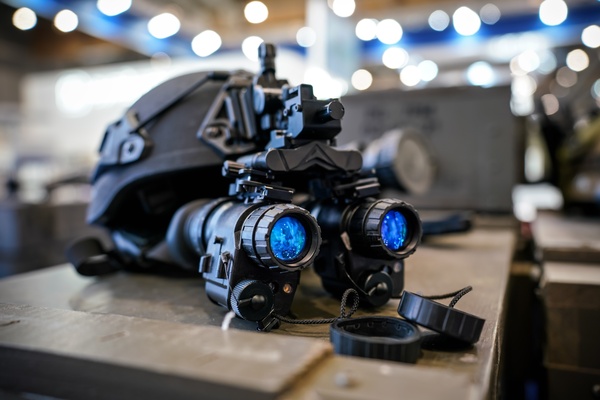
The role of night vision technology in the military
AD
Battles don’t wait for the sun to rise. Night vision technology is an essential tool for modern military operations. Today’s systems do far more than turn areas into green landscapes. They help troops spot movement, read terrain, and track threats when they can’t see through the darkness.
Night vision gives them a clear picture and a heightened chance to move confidently instead of guesswork. An understanding of how this technology works will reinforce its value.
Why the dark no longer wins
Military planners prize visibility because visibility drives survival. A soldier who can identify a target, avoid an obstacle or detect motion through haze gains a real edge. Today’s advanced systems combine image intensification with thermal sensing. They will function in low light, rugged weather, and visually messy conditions. The fusion gives users a rich view of the environment instead of a flat, limited snapshot.
This is where the technology gets interesting. Traditional night vision amplifies tiny amounts of ambient light. Thermal imaging, by contrast, reads heat signatures. Put them together, and the result becomes far more useful in the field. A hidden person, a recently used vehicle, or a target disguised by smoke will stand out.
How military optics improved
Night vision used to mean bulky gear, narrow views, and a long list of compromises. That era is fading fast. Engineers now push for wider fields of view, sharp resolution, low power draw, and compact designs. The goal is to pack more performance into gear that troops wear with ease and trust.
That engineering push reaches deeper than lenses and sensors. Power design plays a quiet but decisive role, especially in compact systems that must perform under stress. Even highly specialized designs must follow the MIL-SPEC requirements for night vision power supplies. They shape the reliability and safety of these devices in extremely demanding environments.
Where battlefield vision goes next
The next chapter won’t just help troops see in the dark. It will help them interpret figures in the night. People can expect smart sensor fusion, fast data sharing, and tight links between vision systems, navigation tools, and battlefield networks.
So yes, the military still wants sharper goggles for their troops. But the bigger story sits elsewhere. Night vision technology for military applications is a bridge between human perception and machine-speed awareness. That’s a serious leap, and it shows no sign of slowing down.
AD
 Nokomis, IL
 64°F
Feels like 65°F°L: 64° H: 64°
64°F
Feels like 65°F°L: 64° H: 64°
AD

AD