Listeners:
Top listeners:
-
 play_arrow
Revolution Radio Your home for the best variety of Christian music
-
 play_arrow
Heartland Newsfeed Radio Network Heartland Newsfeed Radio Network
-
play_arrow
Heartland Newsfeed Radio Network (Abovecast Backup) Heartland Newsfeed Radio Network
-
 play_arrow
Home For The Holidays Radio
-
 play_arrow
Democracy Now! 2026-08-03 Monday
What materials work well in manufacturing?
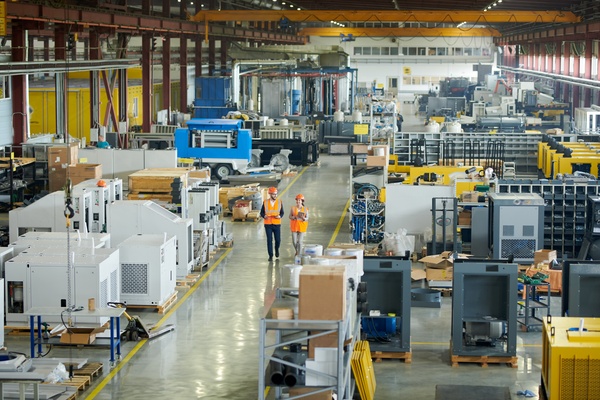
Manufacturing is a highly intensive production process that demands the use of durable materials. For every piece of machinery to function properly, manufacturers need to determine which materials work the best. Learn about the features of steel, aluminum, and plastic, and uncover how each one can support your facility’s performance, safety, and efficiency.
Steel
Steel has an exceptional strength-to-weight ratio. Carbon steel offers durability for structural applications. Stainless steel works well for food processing and pharmaceutical manufacturing.
The versatile material’s nonreactive surface reduces contamination risks and simplifies cleaning protocols. These features make it easier to comply with FDA regulations.
Aluminum
Aluminum is a strong and durable choice for manufacturing because it’s lightweight, strong, and corrosion-resistant. It’s ideal for applications where weight reduction improves efficiency. Not to mention, aluminum can withstand harsh environments.
Engineering plastics
High-performance plastics, such as PEEK, POM, and nylon, resist chemicals, reduce noise levels, and eliminate the need for lubrication in many applications. They perform well in high temperatures, making them suitable for aerospace and automotive manufacturing. POM, in particular, provides excellent dimensional stability and low friction for precision mechanical components.
Material selection criteria
Choosing the right material is crucial for optimizing performance, cost-efficiency, and durability in industrial operations. Carefully evaluate the material’s mechanical properties, the facility’s conditions, the operation’s production demands, and industry compliance standards.
Performance requirements
Evaluate materials based on your specific operational demands. Consider mechanical properties like tensile strength, impact resistance, and fatigue limits. Temperature resistance becomes critical in applications involving heat processing or extreme environmental conditions.
Chemical compatibility prevents material degradation and ensures product quality. Materials that resist your process chemicals reduce replacement costs and minimize production interruptions.
Safety and compliance
Select materials that meet relevant industry standards and safety regulations. Food-grade materials prevent contamination in food processing, while flame-resistant materials enhance workplace safety in high-risk environments.
Careful material selection requires understanding the manufacturing environment and machinery performance requirements. Consider consulting with material suppliers to identify optimal solutions for your applications.




 72°F
Feels like 73°F°L: 70° H: 72°
72°F
Feels like 73°F°L: 70° H: 72°