



Listeners:
Top listeners:
00:00
00:00
volume_up
chevron_left
-
 play_arrow
Revolution Radio Your home for the best variety of Christian music
-
 play_arrow
Heartland Newsfeed Radio Network Heartland Newsfeed Radio Network
-
play_arrow
Heartland Newsfeed Radio Network (Abovecast Backup) Heartland Newsfeed Radio Network
-
 play_arrow
Home For The Holidays Radio
-
 play_arrow
How Do Other Countries do Healthcare? Andrew Heaton, Sally Primus
Manufacturing Safety: Best Practices for Modern Plants
AD
Manufacturing environments continue to evolve, but safety remains a constant concern. In May 2025, OSHA introduced updated safety guidelines designed to address common hazards in modern workplaces. Just weeks later, on June 26, the US Department of Labor renewed its National Emphasis Program focused on amputations in manufacturing, signaling renewed attention to machine safety and worker protection.
To meet today’s standards and protect the workforce, employers must implement the best manufacturing safety practices for modern plants. Let’s take a closer look at some of these practices.
Risk Assessment and Hazard Planning
Every safety strategy begins with a detailed risk assessment. Employers must identify physical, chemical, and mechanical hazards throughout the facility, prioritizing those linked to high-impact incidents like amputations. Equipment reviews, historical data, and staff feedback can help with recognizing gaps in safety protocols.
Preventive planning is essential after documenting risks. Workflow design, ergonomic stations, and clearly marked hazard zones reduce chances for injury. Updating these assessments annually ensures alignment with OSHA standards and evolving technologies.
Machine Safety and Automation
Machinery poses one of the most significant risks in any plant, especially if guards or lockout/tagout procedures are missing or outdated. As OSHA’s renewed emphasis program highlights, unguarded equipment remains a leading cause of workplace amputations.
One solution lies in automation. Part of the conversation highlights the importance of CNC machining for modern manufacturing, where automated precision reduces human error and exposure to dangerous moving parts. When machines are programmed and monitored, safety increases without sacrificing output.
Personal Protective Equipment (PPE)
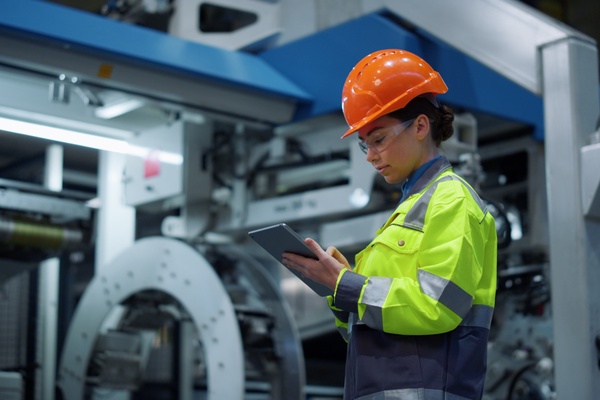
Protective equipment must match the hazards present. Helmets, gloves, goggles, and hearing protection are the foundation of plant safety; however, selecting extra gear for specific environments is equally important. For example, workers handling sharp materials need cut-resistant gloves instead of basic hand protection.
OSHA’s recent updates also underscore the increasing demand for advanced respiratory protection and hearing safety in noisy or dusty environments. Employers should reevaluate PPE standards annually to confirm they’re keeping pace with modern risks.
Building a Safety Culture
Rules and equipment only go so far without a workplace culture that supports them. Safety must be part of the daily routine, from pre-shift meetings to open reporting systems that encourage staff to voice concerns without fear.
Training is just as important. Workers should receive role-specific instruction when hired and participate in ongoing refresher courses. Visible signage, consistent communication, and knowledgeable supervisors all contribute to reinforcing good habits.
Ongoing Monitoring and Review
Compliance doesn’t end once policies are in place. Quarterly internal audits, incident reviews, and feedback loops keep safety programs dynamic. Business leaders should use these tools to spot patterns and implement corrective actions before accidents occur.
Given OSHA’s renewed focus on machine-related injuries, it’s also wise to track and report data in alignment with national safety benchmarks. This not only improves workplace safety but also demonstrates due diligence in meeting federal standards.
Invest in Forward-Thinking Safety
Business leaders should explore predictive tools, smart monitoring systems, and updated machinery that align with the best manufacturing safety practices for modern plants. The future of safety depends on the steps you take today.
AD
 Nokomis, IL
 89°F
Feels like 94°F°L: 89° H: 89°
89°F
Feels like 94°F°L: 89° H: 89°
AD

AD