Listeners:
Top listeners:
-
 play_arrow
Revolution Radio Your home for the best variety of Christian music
-
 play_arrow
Heartland Newsfeed Radio Network Heartland Newsfeed Radio Network
-
play_arrow
Heartland Newsfeed Radio Network (Abovecast Backup) Heartland Newsfeed Radio Network
-
 play_arrow
Home For The Holidays Radio
-
 play_arrow
Democracy Now! 2026-08-25 Tuesday

What Really Lies Beneath a Manhole Cover?
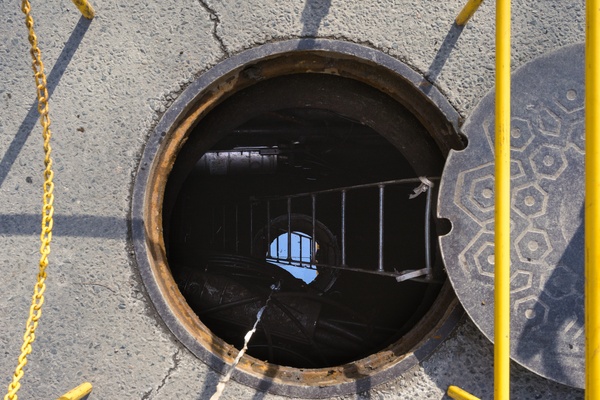
A manhole cover blends into the street until a utility crew surrounds it with cones. Drivers cross it without thinking about the equipment below. Yet a single opening may lead to systems that keep homes connected and roads clear.
Understanding what lies beneath a manhole cover starts with one important fact: Every opening serves a different purpose. One may provide access to a sewer, while another may protect electrical cables. Nearby covers can lead to completely separate networks.
Communities now place greater demands on those buried systems. Broadband expansion requires more fiber pathways, while aging water and sewer lines need frequent maintenance. Data center construction also adds new pressure as developers connect large facilities to power, communications, and drainage networks.
Manholes Provide Access to Essential Systems
The word “manhole” describes an access point rather than a specific utility. A typical structure includes a cover, supporting frame, and vertical shaft. The shaft leads workers to a chamber, pipe connection, or equipment vault.
Crews use these openings to inspect lines and remove blockages. They also repair cable connections or reach valves without excavating an entire street. Federal construction rules recognize manholes for sewers, storm drains, electrical systems, and communications networks.
Some chambers sit only a few feet below the pavement. Others connect to tunnels or networks that stretch across a city. What’s beneath a manhole cover depends on the utility owner and the surrounding infrastructure.
One Cover Can Conceal Several Networks
Many covers carry words such as “sewer,” “storm” or “electric.” Those markings help crews identify the system before they open the structure. Years of traffic and weather can wear away that lettering.
Location can offer another clue, but it cannot provide a definite answer. A cover near a curb may lead to a stormwater line, while one in the center of a street may provide sewer access. An opening near an industrial site could protect power cables or fiber connections.
Utility crews consult maps and field records before they start work. They may also contact other utility owners when several systems cross the same corridor. Careful identification helps workers avoid damaged lines and service interruptions.
Data Centers Increase Underground Demands
Data center growth continues to push electricity and utility capacity into public debate. Artificial intelligence services need physical facilities that can support extensive computing equipment. Those buildings also require dependable power and high-capacity communications connections.
The U.S. Energy Information Administration projects continued growth in electricity use by data center servers. The agency has also identified standalone data centers as a major source of that increase. Cooling equipment adds further demand because servers generate heat during operation.
Public discussions often focus on electric generation and transmission lines. However, each facility also needs local connections between the building and wider utility networks. Contractors often place those connections underground to protect them and preserve access across the site.
Site Design Starts Beneath the Pavement
Data centers may resemble large warehouses from the road. Below the surface, contractors create routes for electrical conduits and fiber-optic lines. They also build stormwater structures that direct runoff away from buildings and equipment areas.
Therefore, designers must place access points where maintenance crews can reach them. They also need to protect critical data center systems from traffic, and standing water.
Contractors must also consider what will move above each opening. A cover in a landscaped area faces lighter loads than one in a fire lane. Delivery trucks and mobile generators can place substantial force on covers in service yards.
Additionally, site conditions may require locking mechanisms or water-resistant seals. As a result, designers may choose slip-resistant surfaces in areas where workers regularly walk. A well-matched cover allows crews to reach the system while protecting everyone who crosses above it.
Round Covers Solve Practical Problems
Many manhole covers use a round shape because the design offers several advantages. A circular cover cannot fall through a slightly smaller circular opening. Workers can also return it to the frame without aligning corners.
The round shape makes a heavy cover easier to move across a short distance. A worker can roll it rather than carry its full weight. This feature can reduce strain during routine maintenance.
Not every utility opening uses a circle. Large vaults and drainage channels may need square or rectangular panels. Manufacturers can also create custom shapes when existing structures do not match standard dimensions.
Engineers select materials based on traffic and environmental conditions. Cast iron offers durability for many public streets, while steel or composite materials may suit other locations. The frame and surrounding pavement must also support the expected load.
Open Manholes Create Immediate Danger
An open manhole should never invite public inspection. The chamber may contain toxic gases or energized equipment. Water can also move through the space with enough force to trap a person.
The Occupational Safety and Health Administration treats many manholes as confined spaces because they limit entry and exit. Some chambers may contain hazardous atmospheres or lack enough oxygen to support life. Workers cannot always detect those dangers through sight or smell.
Professional crews test the atmosphere before anyone enters. They may ventilate the chamber and keep an attendant at the surface. Workers also use barriers to protect the opening from pedestrians and traffic.
Emergency planning plays a critical role. A rescuer who enters without proper equipment can quickly become another victim. Trained teams use retrieval systems and follow procedures that address the hazards inside each space.
Storms Can Disrupt Underground Systems
Heavy rain can change conditions below the street within minutes. Stormwater pipes collect runoff from roads and paved properties. Older communities may use combined systems that carry stormwater and wastewater through the same network.
Intense rain can overwhelm pipes or increase pressure beneath a cover. Water may rise into streets, while damaged frames can shift under the force. Stormwater structures need accessible openings so crews can remove sediment and maintain important controls.
Floodwater can also hide a displaced cover. Drivers may see only a shallow pool while an open chamber sits below the surface. People should avoid flooded streets rather than attempt to inspect the source of the water.
Changing weather can damage the pavement around a frame. Repeated freezing and thawing may create gaps that allow a cover to rock under traffic. Road crews must inspect the entire structure instead of replacing only the visible lid.
Residents Can Report Warning Signs
Most covers perform their job without attracting attention. However, unusual movement or noise can signal a problem. A cover that rocks when vehicles cross it may not sit correctly in its frame.
Cracks or missing pieces also require attention. Water flowing from an opening may point to a blocked or overloaded system. Unusual heat or smoke could signal an electrical hazard.
Residents should report damaged covers to the municipality or utility that manages the area. They should share the nearest street address or intersection when possible. A clear location helps crews find the problem quickly.
No one should attempt to lift or reposition a cover. These lids can cause serious injuries, and the opening may expose hazards below. Drivers should also avoid crossing a visibly damaged cover.
As communities expand digital networks and upgrade aging utilities, the systems below local streets will grow more complex. Manhole covers will continue to provide crews with direct access to those networks. The ordinary lid at street level may protect a vital connection to water, power, or the digital economy.


 Nokomis, IL
 80°F
Feels like 80°F°L: 80° H: 80°
80°F
Feels like 80°F°L: 80° H: 80°


Post comments (0)