




Listeners:
Top listeners:
00:00
00:00
volume_up
chevron_left
-
 play_arrow
Revolution Radio Your home for the best variety of Christian music
-
 play_arrow
Heartland Newsfeed Radio Network Heartland Newsfeed Radio Network
-
play_arrow
Heartland Newsfeed Radio Network (Abovecast Backup) Heartland Newsfeed Radio Network
-
 play_arrow
Home For The Holidays Radio
-
 play_arrow
How Do Other Countries do Healthcare? Andrew Heaton, Sally Primus
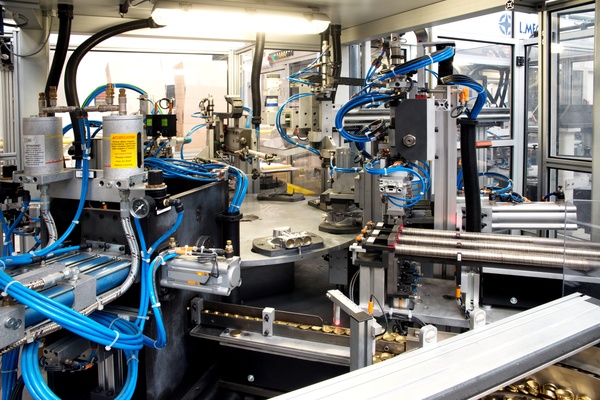
Fluid Control Challenges in Industrial Automation
AD
Industrial automation depends on consistency. When fluids move through a system at incorrect pressure, speed, or volume, small issues can quickly become bigger production problems.
That’s why fluid control is so critical to automated equipment. Whether a facility handles water, chemicals, oils, or specialty liquids, every process depends on precise movement from one stage to the next. Even a minor disruption can affect product quality, slow output, and cause additional wear on equipment.
Common Pressure Problems
Pressure control is often one of the biggest fluid control challenges in industrial automation. If pressure rises too high, components can wear down faster, and seals can fail. If pressure drops too low, the system may not deliver enough fluid to complete the job.
Operators need equipment that responds quickly and remains stable under changing conditions. In many automated environments, production demands shift throughout the day, so fluid control devices must keep pace without causing flow inconsistencies. A system that performs well in one cycle may struggle in the next if it lacks the right design.
Flow Rate and Timing
Flow rate matters just as much as pressure. In automated production, fluid delivery often needs to occur at a specific speed for a set duration. If the flow rate drifts, the final product may not meet the required standard.
Timing also affects performance. Machines often rely on coordinated sequences, and fluid movement needs to match that rhythm. When valves open too slowly or close too late, waste can increase, and accuracy can drop. Even a well-built system can fall short if timing and flow don’t stay aligned.
Component Selection
The right components can make fluid control much easier to manage. Valves, regulators, seals, tubing, and sensors all need to match the operating conditions. Temperature, viscosity, contamination, and cycle frequency all shape how well those parts perform over time.
In many applications, fluid dispensing systems need solenoid valves because they offer fast, repeatable response in compact designs. That kind of control supports automated processes that depend on accuracy and speed. Still, the valve alone won’t solve every issue if the rest of the system can’t support stable operation.
Maintenance and Reliability
Fluid control systems also face problems related to wear and maintenance. Debris buildup, seal degradation, and inconsistent fluid quality can reduce performance even when the original design looked strong on paper. Small maintenance issues often build up slowly and then show up as downtime at the worst possible moment.
Regular inspection and timely part replacement help reduce those setbacks. A reliable system doesn’t happen by accident. It comes from smart design, compatible parts, and close attention to how the equipment performs in real working conditions.
Keeping Systems on Track
Fluid control challenges in industrial automation often come down to precision, response time, and long-term reliability. When pressure, flow, and timing stay under control, automated systems run more smoothly and produce better results.
That’s why fluid handling deserves careful attention from the start. The better the control strategy, the easier it becomes to keep production moving with fewer interruptions and less waste.
AD
 Nokomis, IL
 61°F
Feels like 61°F°L: 61° H: 61°
61°F
Feels like 61°F°L: 61° H: 61°
AD

AD