



Listeners:
Top listeners:
00:00
00:00
volume_up
chevron_left
-
 play_arrow
Revolution Radio Your home for the best variety of Christian music
-
 play_arrow
Heartland Newsfeed Radio Network Heartland Newsfeed Radio Network
-
play_arrow
Heartland Newsfeed Radio Network (Abovecast Backup) Heartland Newsfeed Radio Network
-
 play_arrow
Home For The Holidays Radio
-
 play_arrow
How Do Other Countries do Healthcare? Andrew Heaton, Sally Primus
Cleaning with hydrogen peroxide: dos and don’ts
AD
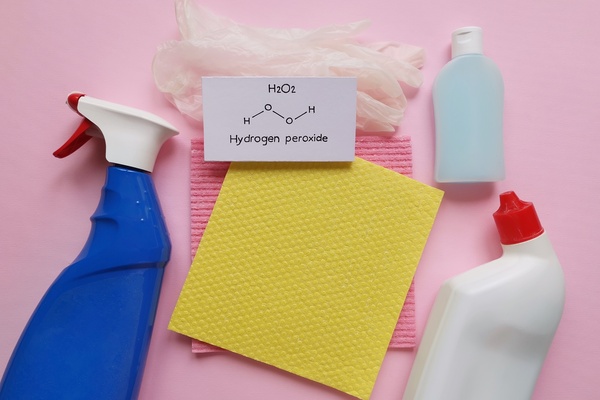
Hydrogen peroxide has earned its spot in many households and industries as a multipurpose cleaning agent with phenomenal disinfecting and sanitizing properties. This affordable solution is great for cleaning tasks in all parts of your home. However, like any chemical, it requires careful handling and proper knowledge to maximize its benefits and protect your health in the process. Read on to learn the dos and don’ts of cleaning with hydrogen peroxide.
Do use it as a disinfectant
Hydrogen peroxide is a natural disinfectant that kills bacteria, viruses, and fungi. It’s so effective that labs use it to disinfect and sterilize their spaces, and you can do the same in your home. Hydrogen peroxide is great for sanitizing countertops, cutting boards, and bathroom surfaces. Just pour a small amount of 3 percent hydrogen peroxide directly onto a cleaning cloth and wipe down areas prone to germs.
Don’t mix it with other cleaners
Never combine hydrogen peroxide with vinegar, bleach, or ammonia. Mixing these chemicals can create toxic substances, such as peracetic acid, that can be very harmful to your health.
Do test before use
Before applying hydrogen peroxide on any surface, do a spot test. While it’s generally safe for nonporous materials, it has bleaching properties that can cause discoloration on delicate items like fabrics or some types of marble.
Don’t ignore ventilation
Although hydrogen peroxide is generally safe, its strong fumes can be irritating, especially in enclosed spaces. Always ensure adequate ventilation when using it for cleaning. This is a good rule of thumb when working with any type of cleaner.
Do store it properly
The safest way to store hydrogen peroxide is in its original container in a cool, dry, dark place. If you must transfer the solution to a different container, it shouldn’t be glass if the concentration is over 10 percent hydrogen peroxide.
Don’t use higher concentrations without caution
Household hydrogen peroxide is typically sold in a 3 percent solution, which is safe for cleaning. Higher concentrations (often sold for industrial purposes) can be used for household applications, but you should employ and store them with caution.
Do use it to combat mold and mildew
Hydrogen peroxide can remove mold and mildew on solid surfaces in your home. Spray directly onto the affected areas, allow it to sit for about 10 minutes, then scrub away the residue. Keep in mind that the solution isn’t effective for porous materials (such as drywall).
Once you know the dos and don’ts of cleaning with hydrogen peroxide, you can enjoy the sterilizing benefits of this versatile solution in your home. Do your research, be safe, and clean responsibly.
AD
 Nokomis, IL
 65°F
Feels like 65°F°L: 65° H: 68°
65°F
Feels like 65°F°L: 65° H: 68°
AD

AD